

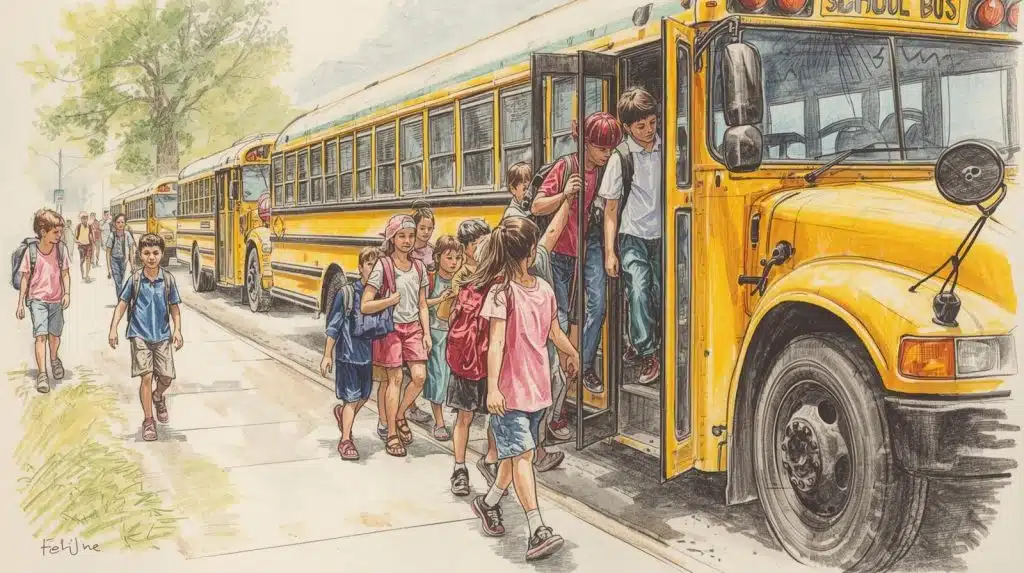
This practice test gives you a realistic preview of what to expect when you sit down at an Alberta registry agent office. Questions are based on the current Alberta School Bus Driver’s Handbook and relevant sections of the Commercial Driver’s Guide for Class 2 – Bus, as revised for 2024.
The format mirrors the official exam, so you can study with materials that accurately reflect the real test experience.
Each practice test set typically includes 25–30 multiple-choice questions designed to strengthen your skills in both the theoretical and practical aspects of driving.
Questions match the format and difficulty level of the official registry exam, ensuring your preparation reflects the real test experience.
Content covers school bus–specific rules, commercial driving knowledge, and safety protocols, which are critical components in obtaining certification for the S (School Bus) endorsement.
This resource is designed for drivers pursuing their Class 2 (Bus) licence plus S (School Bus) endorsement in Alberta, providing a comprehensive pathway to certification.
Practice as many times as needed until you consistently score above the passing mark, thereby solidifying your skills and enhancing your overall driving experience.
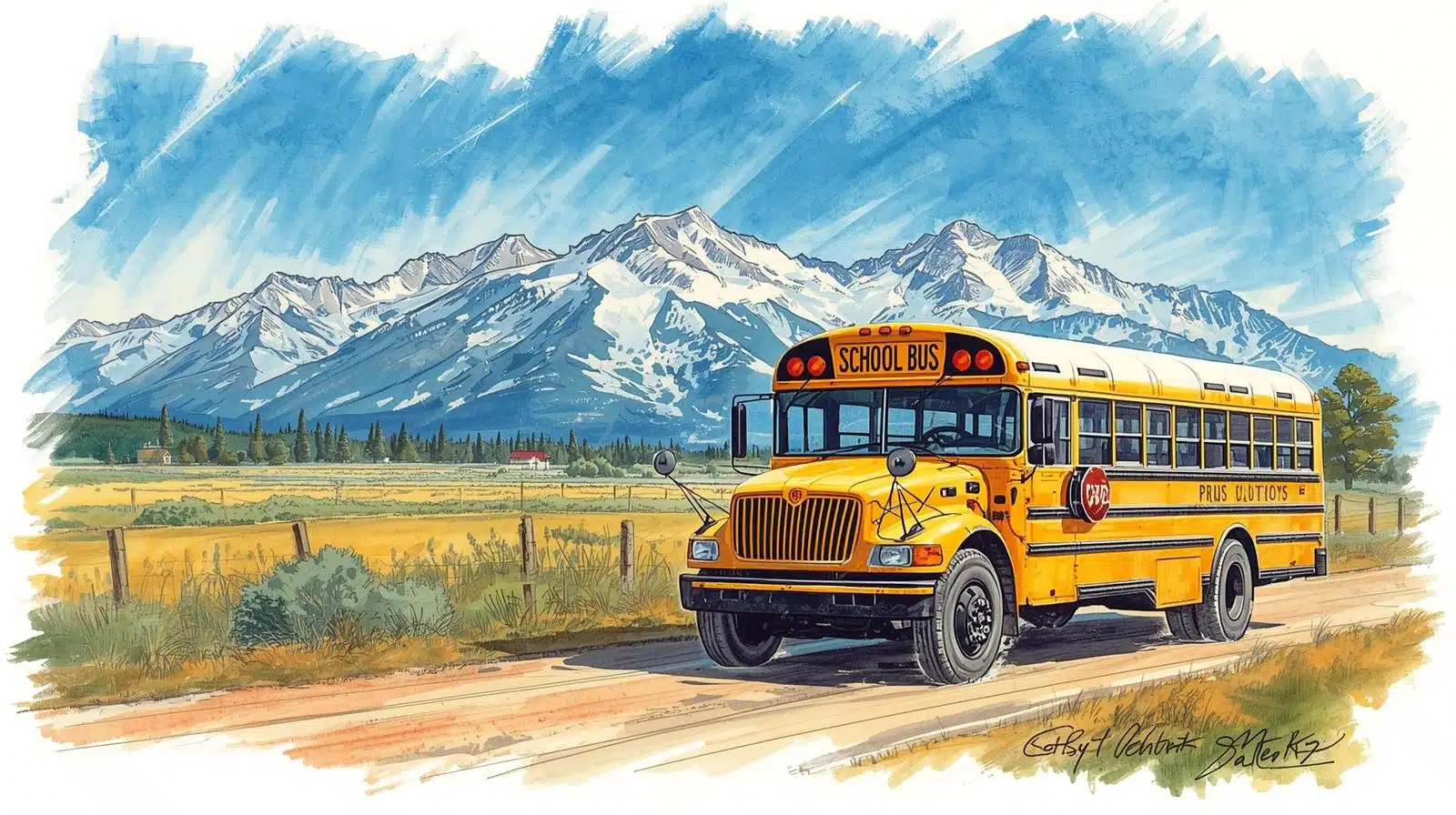
Who Needs the Alberta School Bus Practice Test for a Licence?
Whether you are starting fresh or upgrading your licence, the Alberta school bus practice test is your go-to study resource. The S (School Bus) endorsement is required for anyone who wants to drive a yellow school bus that regularly transports students to and from school in Canada.
Many Class 2 school buses have air brakes, so drivers often need to complete the air brake (Q) endorsement knowledge test. This practice test covers both areas to ensure you are ready for every section of your exam day.
New applicants: Drivers who have never held a commercial licence and are entering the school bus industry for the first time, bringing their driving experience to a new domain through rigorous preparation.
Upgrading drivers: Those moving from a Class 4 licence (small buses under 25 passengers) to Class 2 for full-size buses, further enhancing their driving skills and broadening their scope of certification.
Renewing drivers: School bus operators who need to refresh their knowledge before renewal, ensuring their driving experience remains certified to the highest standard.
Career changers: Individuals transitioning from other commercial roles, like truck, taxi, ambulance, or Uber driving, who bring a wealth of driving experience and are looking to add school bus certification to their credentials.
Typical employers: Public school boards, private schools, charter operators running daily routes, field trips, and extracurricular service, all seeking drivers with verified skills and experience.
How the Alberta School Bus Knowledge Test Works: A Comprehensive Guide
Understanding how the official written test operates will help you prepare effectively. Here is what you need to know about the process at Alberta registry agent offices.
The test is computer-based, multiple-choice, and available in English, and it focuses on certifying your skills through clear, practical questions.
A passing score of 80% or higher is typically required—verify current standards with Alberta Transportation before your test day to ensure your skills meet the certification requirements.
The S endorsement section focuses on school bus–specific rules: loading zones, flashing red and amber lights, stop arm procedures, and student safety protocols, all designed to certify your driving experience in critical areas.
The Class 2 general knowledge test covers broader commercial topics: traffic laws, commercial vehicle operation, speed management, space management, and emergency procedures, encompassing the full range of skills required for certification.
Practice test questions simulate real scenarios, including specific distances in meters, minimum following distances, and daily inspection requirements, giving you a well-rounded driving experience.
This website provides questions that mirror the exact styles you will encounter, so there are no surprises when you begin the official exam, and you are thoroughly prepared for the certification process.
Core Topics and Safety Covered on the Alberta School Bus Practice Test
Every question on this practice test is tied directly to the Alberta School Bus Driver’s Handbook and Commercial Driver’s Guide—not generic material from other provinces or states. Here are the major topic areas you need to study and understand:
Safe loading and unloading: Procedures for rural and urban stops, ensuring students are clear of the danger zone before driving, all crucial for maintaining a safe driving experience and meeting certification standards.
Flashing lights and stop arm: When to use flashing amber lights versus alternating red lights, and how the stop arm signals vehicles to stop, ensuring your skills align with certification requirements.
Student crossing procedures: Rules for students crossing in front of the bus, use of the crossing arm, and checking mirrors before moving, all designed to enhance your driving experience and certify your skills in student safety.
School and playground zone speed limits: Alberta-specific rules, such as 30 km/h during posted times, are posted on signs to keep all residents safe, regardless of province.
Railway crossings: Mandatory stop requirements, opening doors/windows to listen, and safe procedures before you drive across are vital resources for ensuring the safe passage of all vehicles.
Pre-trip inspection and post-trip checks: Daily inspection items, defect reporting, and child check procedures are essential to meet provincial safety standards and specific regulations.
Emergency equipment: Requirements for fire extinguishers, first aid kits, warning devices, and other safety items are mandated resources critical for immediate emergency response.
Mirror use and blind spots: Proper use of interior and exterior mirrors and checking all zones around the bus helps protect the driver and passengers, emphasizing the importance of driver awareness in all provinces.
Adverse conditions: Handling snow, ice, low visibility, and high winds are common in Alberta and require specialized skills and resources from experienced drivers.
The Class 2 (Bus) Commercial Licence and S (School Bus) endorsement work together to qualify you as a professional school bus operator. Understanding the relationships among these categories is essential before you begin the licensing process, which includes various steps to obtain your driver’s license that meets provincial standards.
Class 2 (Bus) Licence and S (School Bus) Endorsement in Alberta
The Class 2 (Bus) Commercial Licence and S (School Bus) endorsement work together to qualify you as a professional school bus operator. Understanding how these categories relate is essential before you begin the licensing process.
A Class 2 licence in Alberta authorizes you to operate:
Any bus with a seating capacity of more than 24 passengers, including school buses and motorcoaches
All vehicles permitted under Class 3, 4, and 5, except motorcycles
The S (School Bus) endorsement is a separate qualification on top of your Class 2 licence. You need it to operate a school bus that regularly transports students. You cannot legally drive a school bus route without this endorsement, even if you hold a valid Class 2 licence, which emphasizes the commitment to maintaining high safety standards in the province.
Typical licensing steps include:
Step | Requirement |
|---|---|
1 | Hold a full, non-probationary Class 5 licence for the required period |
2 | Be at least 18 years old with no licence suspensions in the preceding three years |
3 | Pass a vision test and submit a completed medical examination form |
4 | Complete Mandatory Entry-Level Training (MELT) for Class 2-S |
5 | Pass the Class 2 knowledge test and the S endorsement knowledge test |
6 | Pass the Class 2-S road test |
7 | If the bus is equipped with air brakes, complete the Q endorsement (air brake course plus test) |
Pre-Trip Inspection and Air Brake Knowledge for School Buses
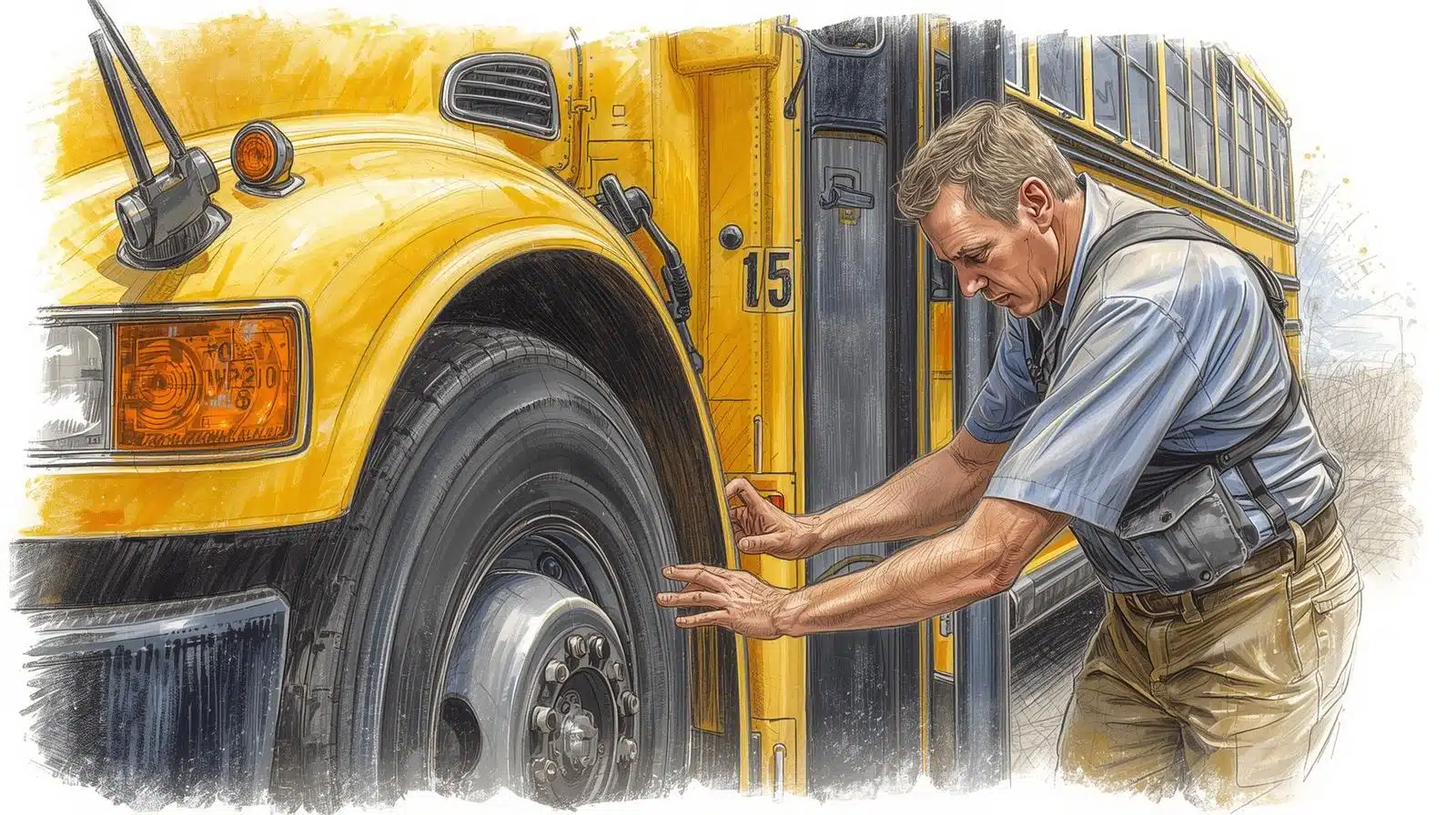
The practice test includes questions that simulate real inspection tasks you will be performing during the Class 2 road test and your daily work routines. Examiners expect you to demonstrate a methodical, complete approach, ensuring each driver’s license reflects real-world competencies.
The practice test includes questions that simulate real inspection tasks you will be performing during the Class 2 road test and your daily work routines. Examiners expect you to demonstrate a methodical, complete approach.
School bus pre-trip inspection items:
Exterior walk-around:
Lights, reflectors, stop arm, and crossing arm functionality
Mirrors are properly adjusted and undamaged
Tires, rims, and wheel condition
Body damage, fluid leaks under the engine, and secure compartments
Interior inspection:
Seats and aisle condition, no obstructions
Emergency exits are operational and clearly marked
Safety equipment present: fire extinguisher, first aid kit, warning devices
Heater, defroster, horn, and windshield wipers are all functional
Mirrors adjusted for maximum visibility
Under-hood checks:
Fluid levels (oil, coolant, power steering)
Belts and hoses condition
Visible leaks as permitted by Alberta rules and employer policy
Air brake knowledge areas:
Understand minimum and maximum air pressure specifications for service and parking brakes with precise accuracy to avoid operational mishaps.
Learned governor cut-in and cut-out pressures as described in the Alberta air brake manual, with the ability to recall these figures on demand.
Daily air brake checks: air loss rates, low-air warning device operation, spring brake activation point demand a methodical approach for maintaining fleet safety.
Understanding that the Q endorsement is required—not optional—for any bus equipped with air brakes is crucial and should be regarded with high accuracy to comply with legal standards.
How you study matters as much as what you study. Follow this recommended sequence to ensure you are ready to book your official test with confidence.
Using Our Alberta School Bus Practice Test for Effective Preparation
Start by reading the Alberta School Bus Driver’s Handbook cover to cover. Then review the Commercial Driver’s Guide (Class 2 – Bus) sections. Only after you have completed this foundation reading should you begin practice tests to build your ability to answer questions accurately.
Simulate test conditions: Complete practice tests under timed conditions similar to the registry office experience to build familiarity and enhance your ability to work under pressure.
Review every answer: Read explanations for incorrect answers and return to the exact handbook section (loading procedures, railway crossings, etc.) for deeper study to ensure accurate knowledge retention.
Track your progress: Keep a written record of which topics you miss repeatedly so you can focus your review and improve the accuracy of your responses.
Set a benchmark: Repeat the practice test until you consistently score 90% or higher before attempting the real exam, ensuring that your ability to achieve high accuracy is solidified.
Use multiple test sets: Each set draws from different questions, giving you broader coverage of the material and improving your ability to handle diverse question types accurately.
Study in sections: Focus on one topic area per day to avoid information overload and to enhance your ability to retain information accurately
Common Mistakes on the Alberta School Bus Knowledge Test
Even well-prepared drivers make predictable errors on the knowledge test. Understanding these common problem areas will help you avoid them and improve your response accuracy.
- Amber versus red flashing lights: With improved focus on accuracy, you can avoid misunderstandings about when to activate each light and when the stop arm deploys.
- Stopping distances: Forgetting exact distances at railway crossings and the required number of meters around a stopped school bus can lead to dangerous inaccuracies.
- School zone and playground zone confusion: Mixing up speed limits and time periods for each zone, as shown on Alberta signs, can be minimized by improving your ability to distinguish these important variations accurately.
- Daily inspection gaps: Overlooking emergency exits, passenger loading door checks, and child check procedures required at route finish can be mitigated by developing a systematic approach to maintain inspection accuracy.
- Air brake specifications: Not knowing precise cut-in/cut-out pressures or maximum allowable air loss rates can compromise safety and should be studied accurately.
Strategies to avoid these errors:
- Create flashcards for specific distances, speeds, and air pressure numbers to aid memory and increase accuracy in recalling information.
- Re-read the penalty sections in the handbook to understand why rules exist, thereby enhancing your ability to comply accurately.
- Take the practice test repeatedly—it is designed to expose and correct weaknesses before your official exam, improving both your ability and accuracy.
Next Steps After Passing the Practice Tests
Book your official tests: Schedule the Class 2 and S endorsement knowledge tests at an authorized Alberta registry agent—check the page on Alberta Transportation’s website for locations to avoid scheduling errors and ensure accuracy in your ability to fulfill test prerequisites.
Book your official tests: Schedule the Class 2 and S endorsement knowledge tests at an authorized Alberta registry agent—check the page on Alberta Transportation’s website for locations
Confirm requirements: Bring required identification, fees, and documents on test day; call ahead if you have questions
Plan for the road test: After passing the written test, book your Class 2 road test with a licensed examiner
Complete air brake endorsement: If your school bus is equipped with air brakes, schedule the Q endorsement knowledge test and practical assessment
Continue learning: Written knowledge is only one part of becoming a safe professional school bus driver—ongoing practice and handbook review will serve you throughout your career
Your preparation doesn’t end when you pass the learner knowledge test. Great drivers keep learning, adapt to new regulations, and share best practices with colleagues.
Start the Alberta school bus practice test today and take the first step toward your commercial driving career. With consistent study and repeated practice, you will be ready to pass with confidence and begin a rewarding role transporting students safely across Alberta.