
Air Brake Practice Test 2026
- Alberta Air Brake Knowledge Practice Test
- BC Air Brake Endorsements Practice Test
- Manitoba Air Brake Endorsements Practice Test
- New Brunswick Air Brake Written Test Practice
- Newfoundland Air Brake Endorsement Practice Test
- Nova Scotia Air Brake Knowledge Test
- Ontario Air Brake Z Endorsement Knowledge Test Practice
- Quebec Air Brake Practice Test
- Saskatchewan Air Brake Knowledge Test Practice
The Essential Guide for Success in Canada: Air Brake Test
Although preparing for the Air Brake Test can be frightening, you will be on your way to overcoming a significant portion of commercial driving if you use appropriate sources and learning techniques. Requirements for obtaining an air brake endorsement may vary depending on the class of driver’s licence you are pursuing, such as Class 1, 2, 3, or 5. Along with discussing the exam format and scoring criteria to ensure success on your Air Brake Test, this guide provides a thorough review of air brake systems, their components, and how they differ from hydraulic brakes.
To guarantee success on your air brake knowledge test, new or returning learners must know the exam structure and scoring criteria. We will explore these facets and discuss the significance of passing this test for prospective Canadian truck or bus drivers.
Exam Methodology and Scoring Guidelines
Multiple-choice questions covering the operations, maintenance, troubleshooting, and safe operation practices of air brake systems will help you evaluate your knowledge of them. Though there are four possible answers to every question, only one is right. The air brake knowledge test is typically administered on a computer at exam centers, replacing traditional paper exams. You have to answer correctly at least 80 out of 100 questions to pass the test with at least an 80% score.
Kind of question: multiple-choice
Total Questions: Different provinces
Passing score: minimum 80%
Allotted Time: Usually between one and two hours; varies depending on jurisdiction
Consider using online tools, such as free practice tests from sites like www.commercialdriver.ca, to properly prepare for the test structure.
Study Guide for the Written Knowledge Test on Air Brakes
Using different tools and applying effective study techniques will help you ensure success on your air brake test. Combining several learning strategies will help you grasp air brake systems better and increase your chances of passing the exam.
To maximize your results, continue your study efforts and ensure you follow the correct sequence of steps in your preparation for the air brake test.
Test Overview for Air Brakes
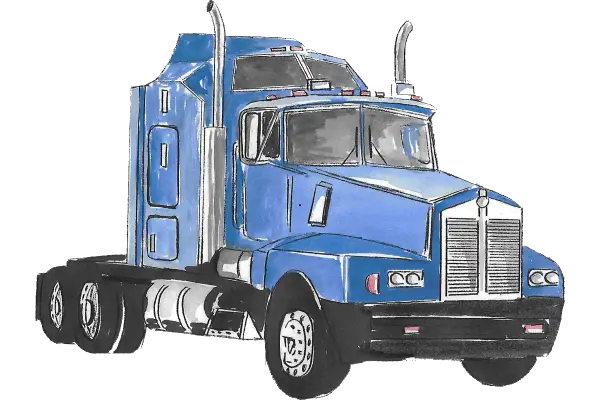
Your knowledge of the parts and workings of an air brake system is tested on the written test. Getting your Commercial Driver’s License with an endorsement for running vehicles fitted with these brakes requires passing this test.
Successful completion of the required air brake training and knowledge test is necessary to obtain the air brake endorsement, and proof of completion may be required during the licensing process.
The structure, scoring criteria, and significance of the Air Brake Test in enabling you to become a qualified driver will be discussed in this paper.
Air Brake Components
Understanding the air brake system is a fundamental step for any driver aiming to obtain an air brake endorsement on their driver’s licence. Vehicles equipped with air brakes rely on a network of specialized components that work together to provide safe, reliable stopping power. Gaining a solid grasp of these components is not only important for passing your knowledge test but also for confidently operating a vehicle equipped with an air brake system in real-world conditions.
The core components of the air brake system include the air compressor, air tanks, brake chambers, and slack adjusters. The air compressor is the heart of the system, generating the compressed air needed for braking. This air is stored in the air tanks until it’s required, ensuring a reserve is always available for safe operation. When you apply the brakes, the compressed air travels to the brake chambers, where it activates the braking mechanism. Slack adjusters are essential for maintaining the correct distance between the brake shoes and the drum, ensuring consistent, effective braking performance.
To verify your understanding and readiness, it’s highly recommended to complete a comprehensive air brake course, such as those offered by reputable driving schools. These courses provide in-depth information about each component, its functions, and the correct procedures for inspection and maintenance. Completing such a course not only prepares you for the knowledge test but also gives you practical experience that will be invaluable during the hands-on portion of your licensing process.
The air brake knowledge test will challenge your understanding of these components and your ability to apply this knowledge in various scenarios. By studying thoroughly and completing practice tests, you can boost your confidence and increase your chances of passing on your first attempt. Remember, the practical test is just as important—it will require you to demonstrate your ability to inspect and maintain the air brake system, ensuring you can operate your vehicle safely and efficiently.
Staying informed and up-to-date is crucial. Make sure to visit your local transportation authority’s official website to access the latest information, study guides, and practice tests. By continuing to study, practicing your skills, and sharing your experience with others, you’ll not only be prepared to pass your tests and obtain your air brake endorsement, but you’ll also contribute to safer roads for everyone. With the right knowledge and experience, you can confidently operate any vehicle equipped with an air brake system and enjoy a successful driving career.
Making Use of Practice Tests
Among the most helpful resources for getting ready for any test are practice tests. These simulated tests allow you to assess your current knowledge level and provide a realistic testing experience. Practice tests can be accessed on any device, including computers, tablets, and smartphones, allowing you to study flexibly. Use practice tests to make sure you carefully consider every question rather than hurrying through them.
Note any wrong responses or areas of difficulty for you. Examine the justifications given with each reaction to better understand why a given option is either right or wrong.
Based on the identified flaws, design a study schedule to address them before the test.
Locating Dependable Research Tools and Resources
Apart from practice tests, various other materials can help prepare for the air brake test. Many provinces offer official air brake manuals as part of their commercial driver licensing program; some trustworthy sources include. For instance, Ontario boasts a great tool called “The Official MTO Air Brake Handbook.” Including use, maintenance, and troubleshooting, this handbook provides all the necessary knowledge on air brake systems.
Online courses abound, tailored especially for preparation for the air brake test. Among such classes are “Air Brakes Explained Simply” and the Smart Drive Test.
Watching instructional videos can be a terrific way to enhance your learning. Websites like YouTube provide innumerable air brake tutorials. Don’t forget to share useful resources or instructional videos with fellow learners to help others prepare for the air brake test.